Chronic back pain is one of the most common reasons people walk into a Chinese medicine clinic, and one of the harder things to treat well. This is what the evidence supports, what a course of acupuncture involves at our St Lucia clinic, and where acupuncture is not the answer.
Why Chronic Back Pain Is So Hard to Treat
Pain lasting more than twelve weeks is classed as chronic, and it is a leading cause of disability and lost work time in Australia. Anti-inflammatories and physiotherapy help a good number of people. They do not help everyone, and long-term medication use brings its own problems.
Part of what makes back pain stubborn is that tissue damage, where there is any, explains only some of the pain. Sleep loss, stress, fear of movement and old postural habits all change how loudly the nervous system reports a given signal. Treating only the sore spot misses most of that.
How Acupuncture Works for Back Pain
In Traditional Chinese Medicine, back pain is read as obstructed or deficient Qi and Blood in the channels running along the spine, principally the Bladder and Governing Vessel channels, often with Kidney involvement where the pain is low, cold and worse with fatigue.
The biomedical account is better measured. Needling appears to release endorphins, alter local blood flow, reduce the sensitivity of myofascial trigger points, and change how the central nervous system processes incoming pain signals.
The clinical evidence deserves a straight summary rather than a flattering one. The current Cochrane review, Mu and colleagues, Acupuncture for chronic non-specific low back pain (2020), found that against sham acupuncture, acupuncture may not produce a clinically meaningful reduction in pain immediately after treatment: a difference of about 9 points on a 100-point scale, short of the 15-point threshold the reviewers treated as clinically important. Against no treatment at all, it did improve pain and function, on moderate-certainty evidence. Overall the certainty of evidence ranged from very low to moderate, and the authors concluded that the decision to use acupuncture may come down to availability, cost and patient preference.
Read plainly: acupuncture is a defensible option for chronic low back pain, better than doing nothing, and not shown to beat a convincing placebo by a margin patients would notice.
What to Expect at Qi Flow Wellness in St Lucia
Your first appointment is mostly conversation. Dr. Hannah Chen, registered with AHPRA as a Chinese medicine practitioner, will take a history covering how the pain started, what makes it better and worse, your sleep, previous imaging and current medications, then examine the area and take pulse and tongue signs.
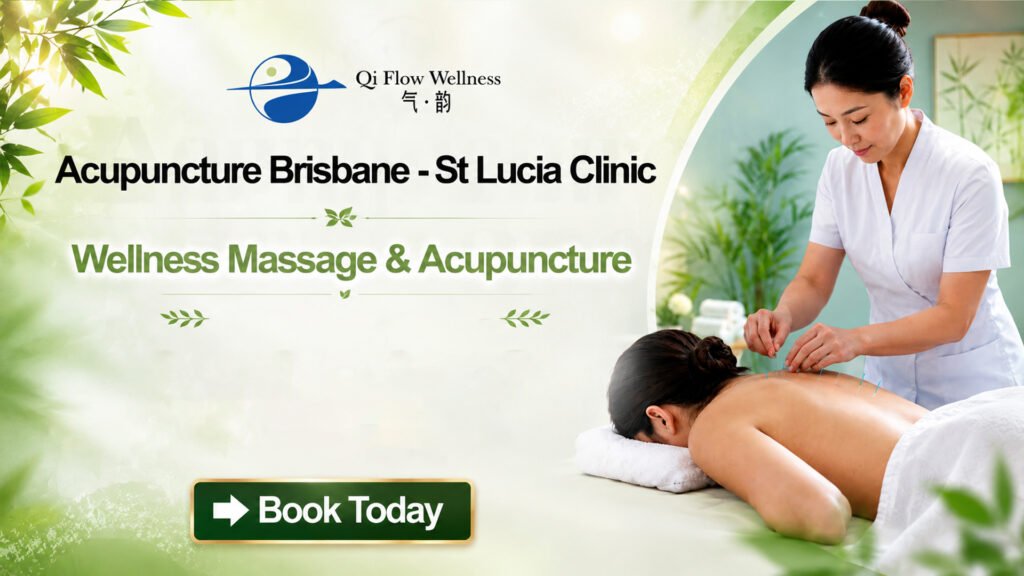
Sessions run 45 to 60 minutes. Fine single-use needles are placed in the back, often with points on the legs or arms, and left in while you rest. Most people describe a dull heaviness or warmth rather than sharp pain. Some feel drowsy afterwards; a few feel briefly sore the next day.
Treatment may also include:
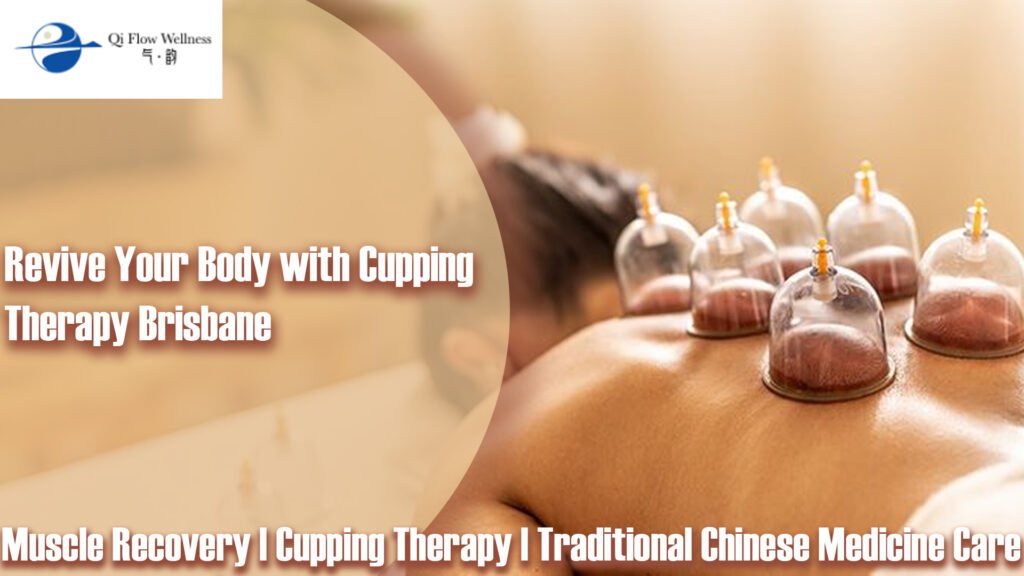
- Cupping: suction along the paraspinal muscles to reduce tension. It commonly leaves circular marks for several days.
- Moxibustion: warming therapy over the lower back, used where pain is worse in cold weather and eases with heat.
- Chinese herbal medicine: a formula matched to your pattern, prescribed only after reviewing your other medications.
- Tui Na: the manual therapy of Chinese medicine, for the muscular component.
The clinic is at 218 Hawken Drive, St Lucia, a short drive from Toowong, Indooroopilly, Taringa and West End.
How Many Sessions Will You Need?
Nobody can tell you that before assessing you, and a number quoted over the phone is a guess. What we can do is agree a short initial course at your first appointment, with a specific review point where we look at whether your pain, sleep and function have actually changed. If they have not, the sensible step is to stop and reconsider rather than book more of the same.
On cost: many Australian private health funds pay a rebate for acupuncture delivered by an AHPRA-registered practitioner under extras cover. Amounts and annual limits vary a great deal between policies, so check with your fund directly. Our reception can tell you the consultation fee.
Some back pain needs a doctor before it needs a needle. Pain with fever, unexplained weight loss, numbness in the groin or saddle area, loss of bladder or bowel control, progressive leg weakness, or pain following a significant fall should be assessed medically and urgently.
This article is general information, not medical advice. Persistent or severe back pain should be assessed by your GP.
Frequently Asked Questions
Is acupuncture scientifically proven to help back pain?
Not in any strong sense. The 2020 Cochrane review found it better than no treatment for pain and function, but not clearly better than sham acupuncture, with evidence certainty ranging from very low to moderate. Several clinical guidelines list it as an option for chronic low back pain. Worth considering is accurate; proven is not.
How quickly does acupuncture work for back pain?
Some people feel looser for a day or two after the first session, others notice nothing until several treatments in, and a proportion do not respond at all. Because that spread is genuinely unpredictable, we set a review point rather than a promise.
Is acupuncture for back pain safe?
With single-use sterile needles and a registered practitioner, risks are low. The usual side effects are minor bruising, brief soreness and occasional light-headedness. Serious complications are rare. Tell your practitioner if you take anticoagulants, have a bleeding disorder, a pacemaker or a weakened immune system, as these change what is appropriate.
Book a consultation at Qi Flow Wellness in St Lucia if you would like to talk through whether acupuncture suits your back pain.