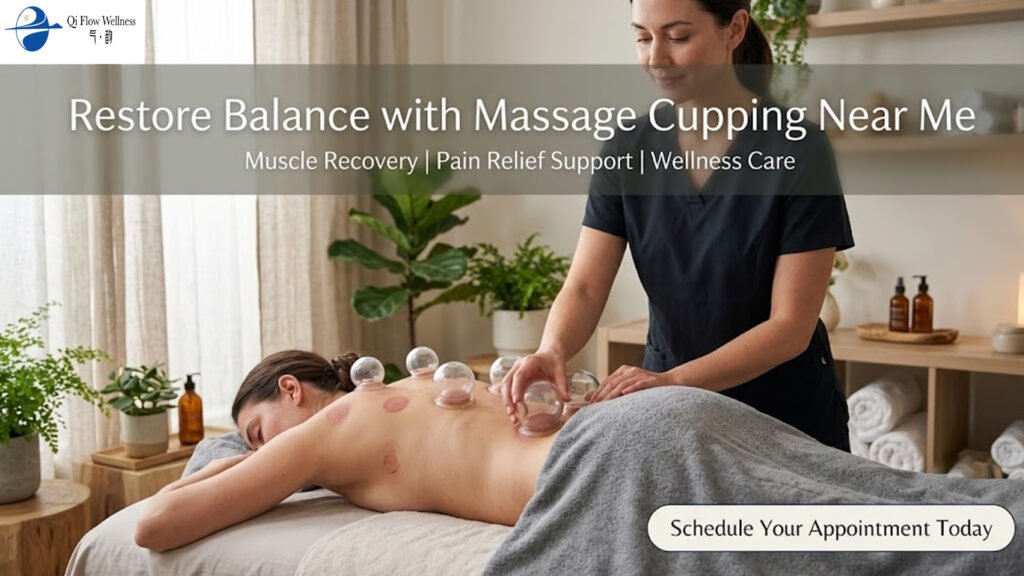
If you’ve searched “massage cupping near me,” you’ve probably already seen the round, purple-ish marks on someone’s back after a session and wondered what it actually does – beyond looking dramatic. The short answer: it’s one of the more effective ways to release deep muscle tension that regular massage sometimes can’t fully reach.
At Qi Flow Wellness in St Lucia, cupping isn’t a gimmick tacked onto a massage menu – it’s a genuine Traditional Chinese Medicine technique, used alongside remedial massage and other TCM wellness treatments to get to tension that’s sitting deep in the tissue.
What Is Massage Cupping, Really?
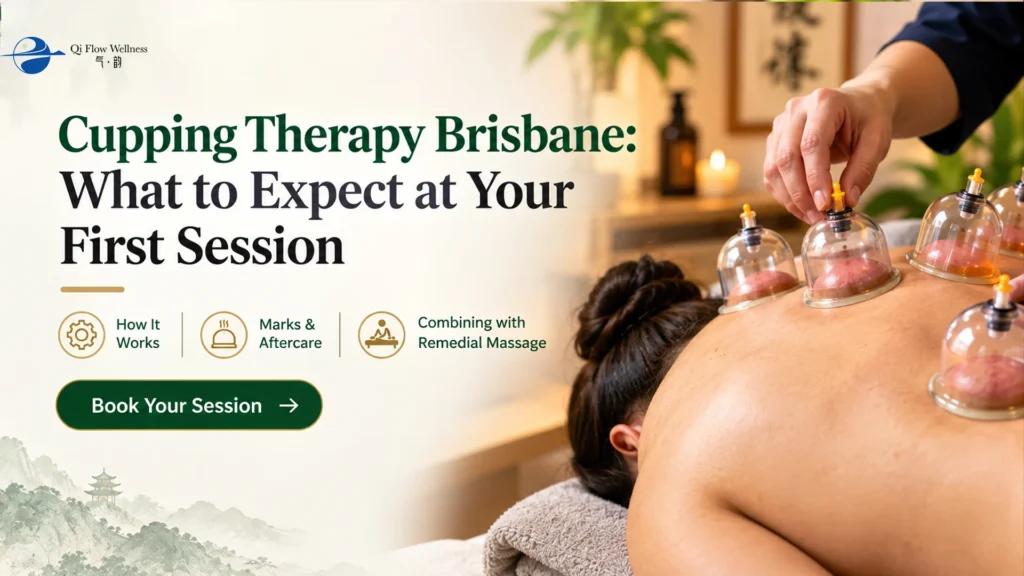
Cupping uses suction – traditionally created with heat or a pump – to lift the skin and underlying soft tissue rather than pressing down into it, which is how most massage works. That upward pull draws blood flow to the area, helps release fascia and muscle adhesions, and can ease tension that’s been sitting there for weeks or months.
It’s commonly combined with hands-on massage therapist work rather than used entirely on its own, since the two techniques target tension from different directions – one lifting, one kneading.
Cupping vs. Cupping Therapy Brisbane-Wide: What’s the Difference?
If you’ve researched cupping therapy Brisbane more broadly, you’ve probably noticed it’s used for everything from athletic recovery to general detox-style wellness. That broader picture is useful context – we’ve covered it in more depth in our Cupping Therapy Brisbane guide.
This page is about something a bit more specific: massage cupping as part of a remedial massage session, close to home in St Lucia, rather than cupping as a standalone wellness add-on.
What Cupping Can Help With
- Chronic muscle tightness, especially neck, shoulders, and upper back
- Recovery after training or intense physical activity – see our piece on why athletes rely on TCM and remedial massage for more on this
- Restricted mobility from long-term postural strain, covered in more detail on our conditions page
- Tension headaches linked to neck and shoulder tightness
- General muscle stagnation from long hours at a desk
Cupping is often paired with dry needling or Gua Sha for a more complete release – our piece on how TCM and remedial massage work together for injury recovery covers how these techniques combine. It’s also a key part of treatment for specific overuse conditions, like in our guide to treating tennis elbow with TCM, where cupping is used to release tight forearm muscles specifically.
What to Expect During a Cupping Session
Your massage therapist will start with a quick check-in about what’s bothering you and where, then apply cups to the relevant areas – usually left in place for a few minutes, or gently moved across the skin (gliding cupping) depending on what your body needs. Treatment is always customised to your body and goals rather than a one-size-fits-all routine.
It’s normal to leave with circular marks where the cups sat. These aren’t bruises in the injury sense – they’re a sign of increased blood flow to the area, and they typically fade within a few days.
Meet the Team Behind the Treatment
Cupping is a technique that benefits from a practitioner who genuinely understands TCM principles, not just the mechanics of applying a cup.
- Dr. Juan Xiao – Registered Chinese Medicine Practitioner and Acupuncturist with 10+ years of clinical experience, China-trained, and experienced in combining cupping with acupuncture and remedial massage as part of a broader treatment plan.
- Dr. Hannah Chen – AHPRA-registered with the Chinese Medicine Board of Australia, grounding every treatment plan in classical TCM theory alongside contemporary clinical practice – you can read more about her approach on our acupuncture near Indooroopilly & Toowong page.
- Tommy Ngo – Pain-management focused, working with clients managing chronic tension and recurring tightness in the neck, shoulders, and lower back – areas where cupping is often most effective.
All therapists are licensed, insured, and either diploma-qualified or AHPRA-registered. You can read more about the full team on our Our Therapists page, or learn about our clinic’s approach to TCM more broadly.
Why St Lucia Locals Choose Qi Flow Wellness
Based at 218 Hawken Drive, St Lucia, we’re an easy option for anyone in Indooroopilly, Toowong, Taringa, or the University of Queensland precinct searching for massage cupping near me rather than driving across Brisbane – including patients from further out, like West End and South Brisbane. With a 5.0 rating from 20+ Google reviews, most new patients hear about us through word of mouth – you can read genuine feedback on our reviews page.
Session Details, Pricing & Health Fund Cover
- Session length: Cupping is typically incorporated into a 45–90 minute remedial massage session, though standalone sessions can be arranged
- Health fund cover: Most major Australian health funds cover cupping when bundled into a remedial massage claim – check your specific policy or ask our front desk
- New patients: You can complete your new-patient forms in advance to speed up your first visit
- Booking flexibility: Same-day appointments are often available
Ready to Release That Deep Tension?
If regular massage hasn’t quite reached the tightness you’re dealing with, cupping might be the missing piece. Book an appointment with our team in St Lucia today, and we’ll help you figure out whether cupping, remedial massage, or a combination is the right fit for your body.