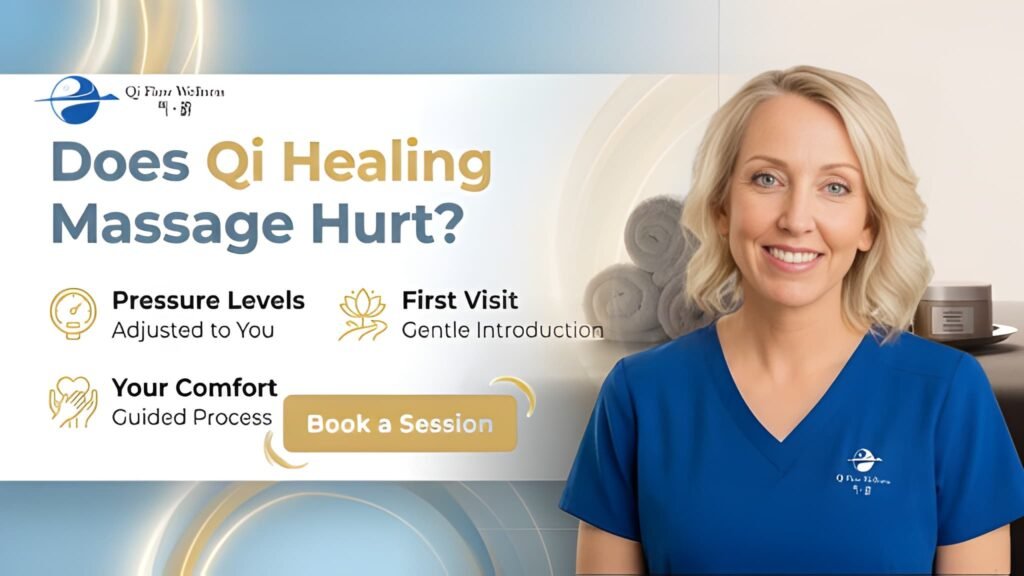
Does qi healing massage hurt? It is the first question many new clients ask, and it is a fair one. The short answer is no. Qi healing massage should feel firm and helpful, but it should not feel painful. Below, you will learn what the pressure feels like and how to adjust it to suit you.
What Is Qi Healing Massage?
Qi healing massage is a hands-on treatment that comes from Traditional Chinese Medicine (TCM). In TCM, qi is the energy that moves along pathways in the body called meridians. When qi flows well, you feel balanced. When it gets stuck, you may feel tight, tired or sore.
Your therapist uses touch to move qi and ease tight muscles. It is a core part of TCM healthcare and works well next to acupuncture and cupping. Good TCM healthcare always starts with listening to you.
Does Qi Healing Massage Hurt?
Qi healing massage should not cause harmful pain. Some spots may feel tender, especially where muscles are tight. Many clients call this a “good ache” that fades as the muscle softens.
During a session, you may feel:
- Slow, flowing strokes at the start
- Steady, firm pressure across the neck, shoulders and lower back
- A dull, deep ache on knots that eases within seconds
- Warmth or light tingling as the area relaxes
Pain that feels sharp, stabbing or burning is a sign to speak up. Tell your therapist straight away so they can change the pressure.
What Pressure Should I Expect?
Pressure is not the same for everyone. It depends on your body, your goals and how you feel on the day. Most sessions use one of three levels:
- Light pressure: Soft, slow touch that calms the body. This works well for first visits or when your body feels sore.
- Medium pressure: Steady pressure that reaches the muscle layer. This is the most common choice for daily tension.
- Firm pressure: Deeper work on stubborn spots. You should feel strong pressure, but never sharp pain.
Try rating the pressure from 1 to 10 and aim for a 5 to 7. At that level, you can still breathe slowly and keep your muscles loose.
Why Do Some Spots Feel More Tender?
Desk work, long drives and stress can build tension in the same areas. During qi healing massage, these spots may feel more sensitive than the rest of your body. This is normal, and the feeling usually fades as you relax.
How to Get the Right Pressure for You
You decide the pressure in every qi healing massage session. These steps help you get more from your visit:
- Share your goals, injuries and health history before you start
- Say “lighter” or “firmer” at any time
- Take slow, deep breaths when the therapist works on a tight spot
- Tell your therapist if you are pregnant, bruise easily or take blood thinners
Wellness Massage & Acupuncture Together
Many people book wellness massage & acupuncture in the same visit. Massage relaxes the muscles, while acupuncture works on the flow of qi. When combined, wellness massage & acupuncture may help you sleep better, hold less tension and feel calmer. That is how TCM healthcare treats the whole person rather than a single sore area.
Choosing a Massage Therapist Brisbane Clients Trust
A good massage therapist Brisbane locals recommend will listen first and treat second. Before your first qi healing massage, ask the therapist how they adjust pressure. Look for a registered practitioner who asks questions and checks your comfort. At Qi Flow Wellness, your care is led by a China-trained TCM doctor, and most major health funds are accepted.
Looking for Massage Toowong Brisbane?
If you want massage Toowong Brisbane, our St Lucia clinic is a short trip away. Many clients who search for massage Toowong Brisbane choose us for the same reason: calm, careful pressure. Same-day appointments are often available, so you can see a massage therapist Brisbane residents trust without a long wait. Whether you want a gentle reset or a deeper session, your massage therapist Brisbane clients book with us will match the pressure to your needs.
Ready to Try Qi Healing Massage?
After a qi healing massage, you should walk out feeling light and at ease. If you are worried about pain, tell us when you book and we will start with a gentle touch. Whether you are new to TCM healthcare or already enjoy wellness massage & acupuncture, book online or call us today. For massage Toowong Brisbane, it is a simple first step toward feeling at ease in your body.
FAQs
1. Is qi healing massage painful?
No. Qi healing massage should feel firm and helpful, not painful. You may feel a dull ache on tight spots, but it should ease as the muscle softens. Sharp pain is a sign to tell your therapist.
2. What pressure should I expect during a qi healing massage?
Most sessions use light, medium or firm pressure. Your therapist will start with a comfortable level and adjust it as you go. A good aim is 5 to 7 on a scale of 1 to 10.
3. Can I ask for lighter or firmer pressure?
Yes. You can ask for a change at any time. Your therapist would rather hear from you than have you feel uncomfortable.
4. Why do some areas feel more tender than others?
Areas with built-up tension, such as the neck, shoulders and lower back, often feel more sensitive. Desk work, long drives and stress can all add to this. The tenderness usually fades as the muscles relax.
5. Will I feel sore after a qi healing massage?
Some people feel mild tenderness for a day, much like after light exercise. Many others feel relaxed and light. If soreness lasts longer or feels strong, let your therapist know.
6. What is the difference between qi healing massage and a regular relaxation massage?
Qi healing massage comes from TCM healthcare and focuses on how qi moves through the body. A regular relaxation massage mainly aims to calm the body. Qi healing massage often pairs touch with TCM ideas, such as meridians.